
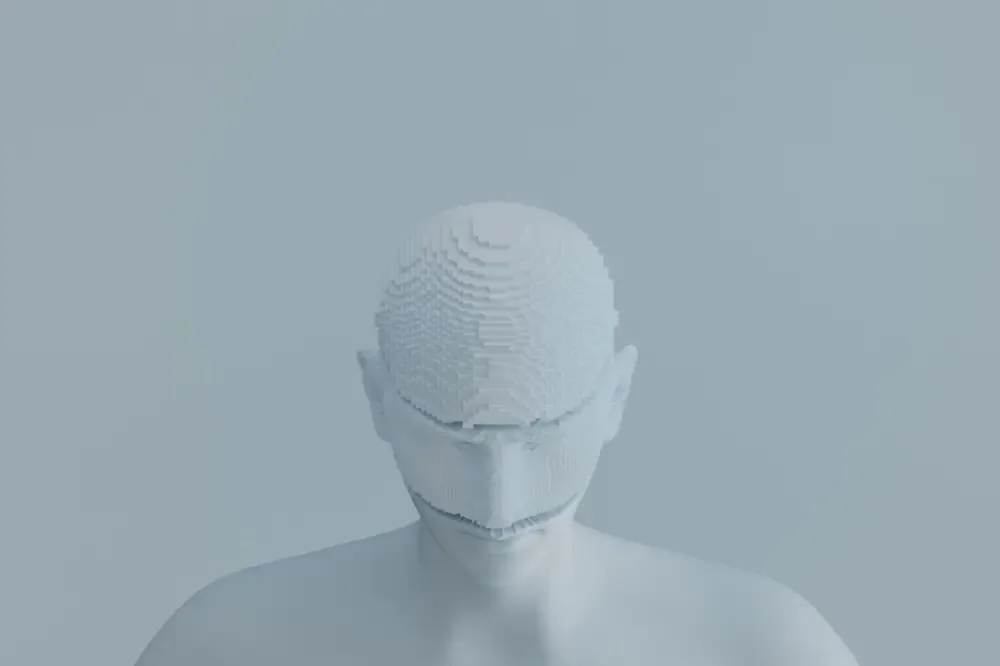
The Great Digital Paradox: Why Text is More Robotic Than AI
For the better part of three decades, we have been told that the internet is bringing us closer together. Yet, in my view, our primary mode of digital communication—the text box—has done the exact opposite. We spend our days firing off Slack messages, emails, and tweets, stripping away the very things that make us human: tone, facial expression, and physical presence. We have become accustomed to a low-fidelity version of ourselves.
This is why the current backlash against AI avatars feels so misplaced. Critics often dismiss synthetic media as ‘creepy’ or ‘uncanny,’ arguing that it devalues human interaction. I would argue the opposite. AI avatars are not a replacement for human connection; they are a necessary upgrade to the sterile, text-heavy environment we’ve been trapped in for years. By reintroducing visual and auditory nuance into our digital lives, these tools are actually making our interactions feel more human than a standard email ever could.
Moving Beyond the ‘Uncanny Valley’ Myth
The most common argument against AI avatars is the ‘uncanny valley’—that feeling of unease when a digital entity looks almost, but not quite, human. While I acknowledge the visual hurdles, I believe this focus on perfection misses the point. The value of an AI avatar isn't in its ability to fool a forensic scientist; it’s in its ability to convey intent and emotion where text fails.
When I see an AI-generated video of a colleague explaining a complex concept, I am receiving thousands of data points that a text summary simply cannot provide. I see the tilt of the head, the rhythm of the speech, and the warmth in the simulated eyes. Even if the rendering isn't 100% lifelike, the emotional resonance is significantly higher than a block of Arial font on a white background. We are moving from a period of digital abstraction back toward a period of digital embodiment.
Restoring Non-Verbal Cues to Global Communication
Research consistently suggests that a massive percentage of human communication is non-verbal. When we communicate through text, we are essentially trying to drive a car with three wheels. AI avatars provide that fourth wheel. They allow for:
- Micro-expressions: Subtle cues that signal empathy or urgency.
- Tone Mapping: Ensuring that a joke isn’t mistaken for a criticism.
- Visual Presence: The psychological comfort of seeing a ‘face’ while receiving information.
By using AI to bridge this gap, we aren't losing our humanity; we are reclaiming the parts of it that the internet originally forced us to leave behind.
Why ‘Real’ Video is Often Less Authentic
It sounds counterintuitive, but I believe that AI avatars can often be more authentic than traditional video calls. Think about the ‘Zoom fatigue’ that has permeated our work culture. When we are on a live camera, we are hyper-aware of our surroundings, our lighting, and how we look. We become performers, distracted by our own thumbnail image, which often leads to a stiff and guarded interaction.
An AI avatar removes this performative friction. It allows a creator or a professional to project an idealized version of their presence while focusing entirely on the substance of their message. It democratizes the ability to ‘show up’ without the anxiety of the camera. In this sense, the AI acts as a vessel for our thoughts, allowing our actual message to shine through without the static of physical self-consciousness.
The Future of Empathetic Digital Interfaces
As these tools evolve, I expect to see them integrated into every facet of our digital lives, from customer service to education. Some might fear a world where they don’t know if they are talking to a ‘real’ human, but I suspect that in time, we won’t care. If an AI avatar can explain a medical diagnosis with more patience, clarity, and perceived empathy than a rushed doctor typing into a portal, which one is the ‘more human’ experience?
We are entering an era where the interface is no longer a barrier. AI avatars allow us to scale our presence and our personality. They allow a teacher in London to ‘personally’ tutor a thousand students in their native languages simultaneously, with a level of engagement that a recorded video or a textbook could never achieve. That isn't a cold, robotic future; it’s a future where technology finally adapts to our biological preference for face-to-face connection.
Key Benefits of Embracing Synthetic Presence
- Language Accessibility: Avatars can speak any language while maintaining the original speaker's likeness, breaking down cultural walls.
- Consistency: They provide a reliable, high-energy presence that humans, who get tired and stressed, cannot always maintain.
- Creative Freedom: They allow individuals to present themselves in ways that reflect their internal identity rather than just their physical reality.
A Shift in Perspective
Ultimately, the discomfort many feel toward AI avatars is a natural reaction to a paradigm shift. We’ve seen this before with photography, the telephone, and the internet itself. Each time, we feared the technology would dilute our souls. Each time, we eventually realized that these tools simply gave us new ways to express them.
I believe we will look back at the era of the ‘anonymous text web’ as a strange, cold blip in history. AI avatars are the bridge back to a more natural way of being. They aren't here to replace us; they are here to represent us in a digital world that has been far too quiet and far too flat for far too long. It’s time we put a face back on the internet.